Cruise ship virus outbreak sharpens MDI hospital's response, protocol

BAR HARBOR, May 8, 2026 - Yet another cruise ship carrying a deadly virus is making the news.
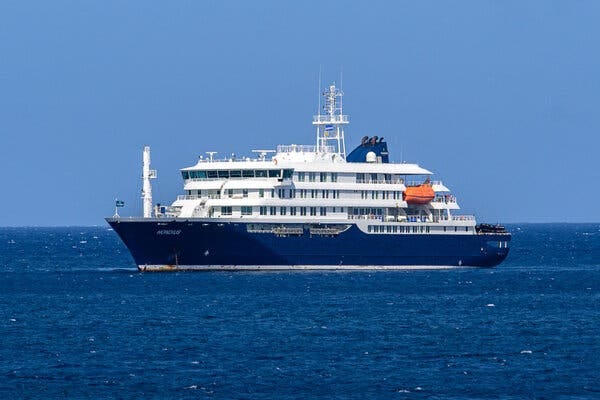
On April 24, nearly two weeks after the first person aboard a cruise ship died of hantavirus, 30 passengers, including six Americans, disembarked in St. Helena, a remote island in the Atlantic Ocean.
“To some public health experts, the alarming thing about this situation is not the hantavirus, which they note spreads among people rarely, and only with close contact over a period of time rather than casual interactions,” reported the New York Times. “It is that the administration’s sluggish response and lack of communication suggest the United States is ill prepared for a larger health crisis, such as another pandemic.
“We should be able to deal collectively with a hantavirus outbreak much more quickly and effectively than this is happening,” said Stephanie Psaki, the coordinator for global health security during the Biden administration.
“Because of deep staffing cuts the Trump administration has made to the C.D.C. and other health agencies, the government has far fewer people to respond to outbreaks, from trainees and contractors who can be deployed to do boots-on-the-ground epidemiology to senior leaders who can coordinate responses across the U.S. government and elsewhere.
“And because President Trump withdrew the country from the World Health Organization, the United States does not receive regular information from member states about emerging health threats,” The Times reported.
I asked MDI Health. AKA MDI Hospital, what its protocol was for a ship carrying infectious disease disembarking in Bar Harbor.
“Thank you for bringing this concern to our community’s attention” was the reply.
“Mitigating the transmission of infectious diseases remains a top priority for our organization, supported through both Infection Prevention and Emergency Preparedness initiatives.
“We share your concerns about transmission rates around summer visitors and cruise ships in particular; therefore, we prepare in a myriad of ways. Typically, we expect Norovirus, off-season respiratory illness, and food-borne illness (think poor storage and cleanliness traveling).
“Over the past years, we have placed a strong emphasis on hand hygiene, recognizing it as a cornerstone of effective infection prevention. In addition, we have enhanced our environmental cleaning practices by upgrading both cleaning products and protocols to better address routine and infectious disease-specific needs.
“During COVID we did a deep review with HVAC engineers, and through a series of upgrades, our facility is now equipped with highly effective air handling systems, with all circulating air passing through HEPA filtration, further supporting a safe environment for patients, staff, and visitors.
“It is important to note that Maine requires all healthcare personnel to receive an annual influenza vaccination and proven measles immunity, which provides added protection against both seasonal and off-season transmission.
“We have been following the Hantavirus outbreak with interest, but unless genotyping and the epi investigations currently happening show increased human to human transmission, this is not really a concern.
“Finally, despite significant visitor volume during the first two years of the COVID-19 pandemic, the island experienced relatively low mortality rates. This reflects the strength of infection prevention measures implemented by both the broad MDI community and MDI Health.”
The response was signed by Danielle Day, BSN RN, and J R Krevans Jr MD (CAPT USPHS-RET).
The hospital responded to my question in less than eight hours. I am grateful for that sense of urgency.
This is an important message for responders, potential reproducers, and repressers of infectious diseases..
It might be worthwhile continuing this discussion to find out about communication to the community if a ship were to arrive with an outbreak, how would people be informed? Where are the procedures to minimize risk shared for businesses and residents? Different infectious diseases require different strategies to prevent spread. What is the reporting mechanism for ships arriving with an outbreak? CDC has different rules for ships with domestic and foreign origins. Luckily in Bar Harbor you now have a passenger cap, so much less risk in terms of quantities of passengers arriving by cruise ship however you might it worthwhile to still expand your protocols (if these answers are not already in place). We are in the process of doing this in Portland and submitted a proposal to the Public Health Dept. They are now revising and expanding their Infectious Disease Protocols for cruise ships arriving with outbreaks, like the Insignia last fall.